Hotel Ads: Video Ideas, What Each Costs With AI, and the FTC Rule on Showing a Price
Five video ads a hotel, motel or inn can make with AI from its own room photos, what each one costs in Novoads credits, and the FTC fee rule that decides how a price can appear in them.

Mauricio Valdivia
·11 min
Two days out, Saturday is half booked
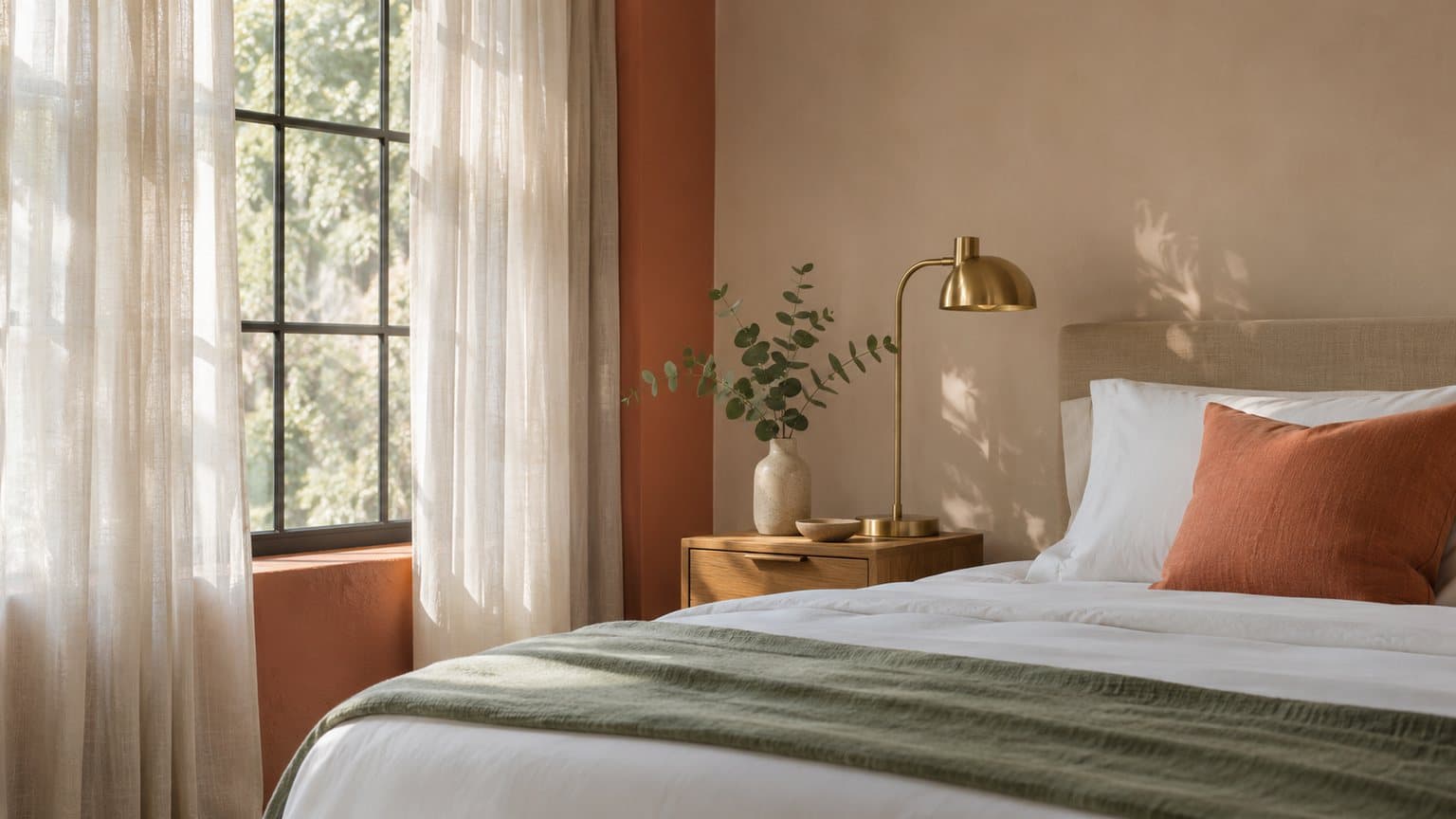
The room you'd most like to sell is made up for the next guest, with white sheets, a sage throw across the foot of the bed, a brass lamp on the nightstand and a tall window over tiled roofs.
That room isn't real. We made it for this post with GPT Image 2.6 Sunburst, as a stand-in for the photo you'd take of your own room. Then we turned it into a five-second Seedance 2.0 Mini clip through our own connector for Claude. The camera drifts from the bed toward the window while the light on the linens shifts. The still cost 1 credit and the clip cost 5.
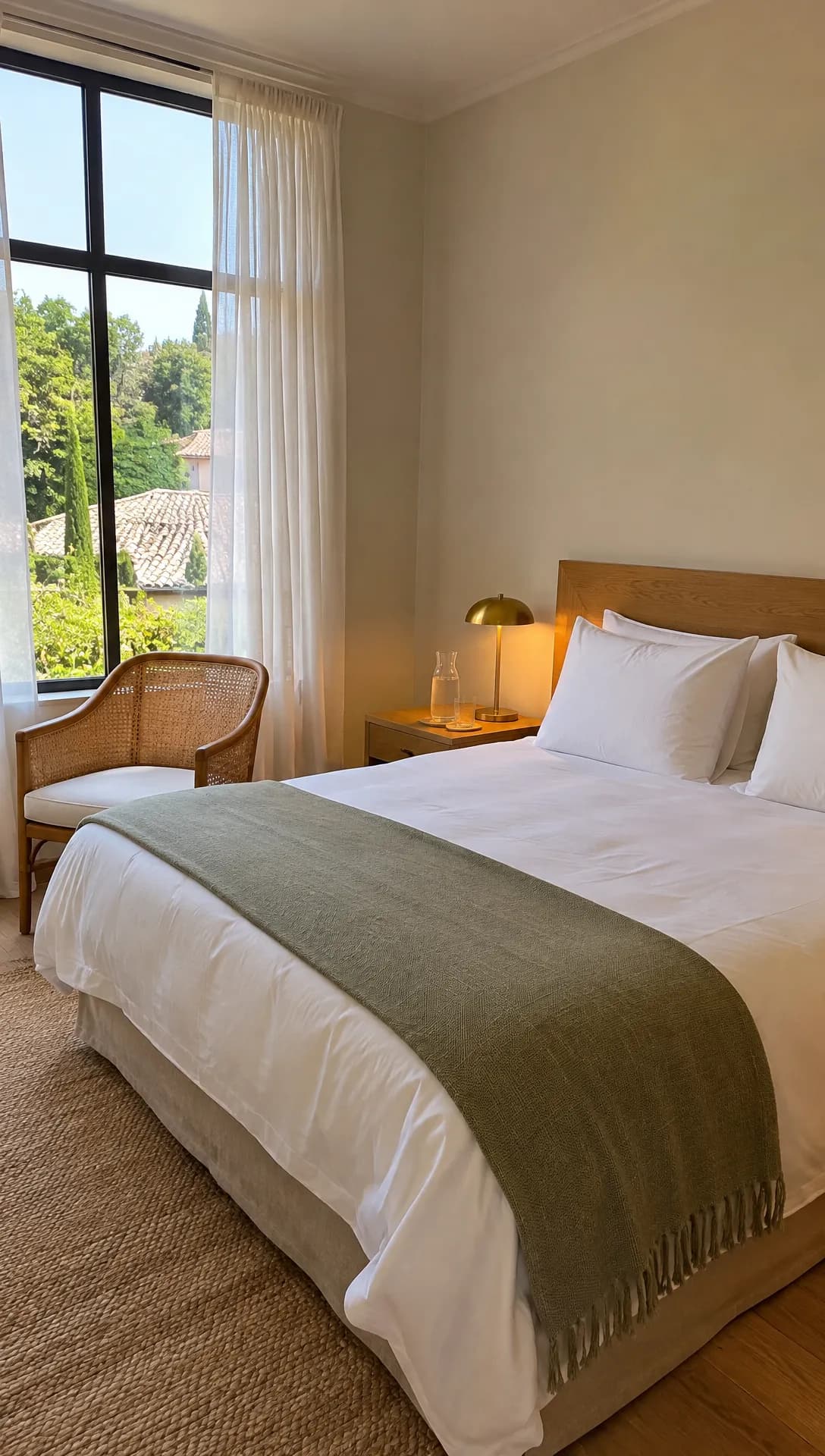 Made in Novoads with GPT Image 2.6 Sunburst · a hotel room made up for the next guest, shot like an owner's phone photo · 1 credit · 2026-11-16 · it stands in for your own photo, and the room isn't a real place
The couple planning that weekend probably has your site open in one tab and the same dates on the big booking sites in the others, where a still of a bed looks like every other bed. We think a few seconds of your own room in motion earns a second look there. Put a price in that ad, though, and a federal rule decides how it has to appear. None of the top guides we opened for "hotel ads" names that rule.
For this post, we read the top results for "hotel ads" and "hotel facebook ads", the FTC's fee rule, Google's hotel price policy and our own prices, all on November 16, 2026. We made the one still and the one clip you see here. We didn't run either as an ad, so we can't tell you what a video does for your bookings.
Five kinds of hotel ad worth making
Sort the ads in the top hotel guides by the job each one does, and they come down to five kinds. Each has a version a small hotel, motel or inn can make from its own photos, and three of them add an AI presenter.
A package for the dates you need to fill
A package ad sells specific nights, such as a slow weekend, midweek nights after the season ends, or a stay with breakfast and a late checkout. It gives guests the clearest reason to book now, so it's the ad most likely to carry a price.
AI handles the parts a small team never has time to film. An AI presenter can read the offer in a few seconds, and you can cut to short moving shots made from your own photos of the room and the breakfast table.
The ad should never show a dish, a view or a room type you don't offer, or a nightly rate without its total. If the package has a price, put the total in the caption, as in "Two nights with breakfast, $412 total" (a price we made up for this example). No other price in the ad should stand out more than that total. That's exactly what the FTC's fee rule asks for, and we quote it further down.
Your rooms, the pool and the view
This one shows the place itself, a few seconds of each space a guest pictures before booking. AI is at its best here, turning a photo you already took into a short clip with a slow push toward the window or, if you have one, a pan across the pool.
Never let a model invent the space. A pool, a view or a suite made from a prompt and shown as yours is a promise you can't keep at check-in. And a clip shouldn't add people who'd pass for your guests or your staff.
The festival weekend, the trailhead or the beach
An ad tied to a local event or a season gives guests a reason to come on those dates and tells them you're close by. An AI presenter can name the event and the dates, your own photo of the building can become a moving shot, and a caption can give the drive time from your door.
Leave out the event's own footage and logo, a crowd at your hotel that never happened, and any distance that isn't true.
Book direct
This one is for the guest comparing your rate on the booking sites with the one on your own site. In a sentence or two with captions, an AI presenter explains what booking direct gets them, such as breakfast, a better room or a later checkout. You can have the same offer read in another language for guests from abroad, since our voice list covers 32 languages.
Don't show a rate that leaves out a mandatory fee, or a saving you can't honor every time. If you also sell trips or packages from a catalog on Facebook, we wrote up Meta's travel catalog ad in a separate post.
A real review on screen
A review is proof from someone who stayed. The honest AI version puts a real review on screen word for word, as a caption over your own photos. We'd ask the guest first.
Never show an AI presenter playing the guest who wrote the review, or a review nobody wrote.
Making these ads in Novoads from your own room photos
Two tools do almost all the work. The Video tab turns a photo into a moving shot, and Talking Actors makes the presenter.
Turning a room photo into a clip in the editor
- Open a project and pick Video.
- Pick a model with the sliders button. Kling 3.0 and Google Veo 3.1 show the start frame box right away, and Wan 3.0 shows it once you switch from "Reference" to "Start / End Frames".
- Drop your room photo into the box that reads "Drop a start frame or click to upload".
- In the prompt, describe only the move, such as a slow push from the foot of the bed toward the window, and nothing that isn't in the photo.
- Press the round arrow button to make the clip.
You get back a clip that opens on your own photo. A five-second Kling 3.0 clip costs 10 credits. Seedance works differently in the editor. It only uses your photo as a reference, which you name in the prompt as @Image1, so the clip doesn't open on it. Before any clip runs, hold it next to the real room and check the furniture, the view and the light.
The clip we made from the stand-in photo
Our own connector for Claude can use a picture as the first frame of a Seedance 2.0 Mini clip, and that's how we made the clip for this post. We gave it the room still from the top of the page and asked for the camera to move from the bed toward the window, with the sound off. It came back at 720p for 5 credits.
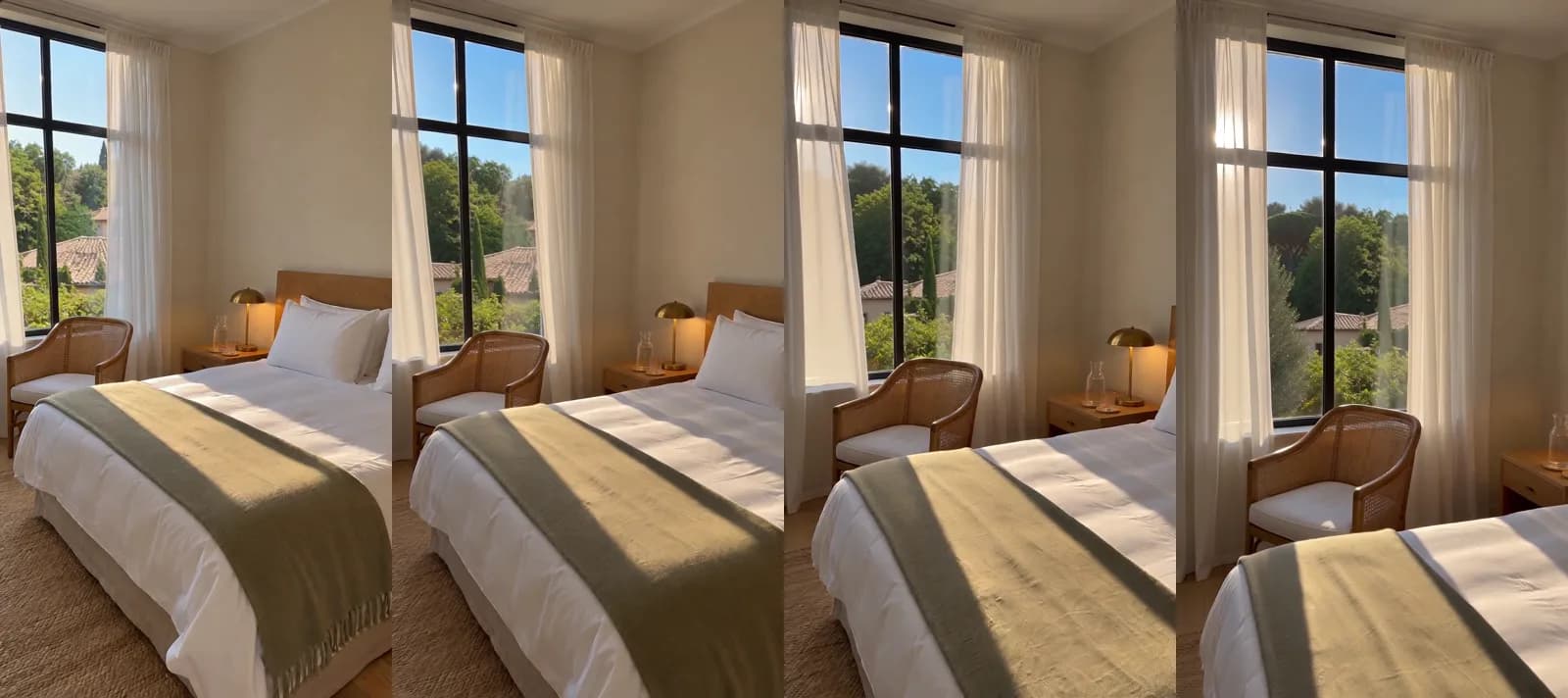 Made in Novoads with Seedance 2.0 Mini · the stand-in room photo as its first frame, the camera moving from the bed toward the window, sound off, 720p, through our connector for Claude · 5 credits · 2026-11-16
Three things change across the four frames.
- The armchair and the curtains come closer.
- The trees and roofs outside fill more of the window.
- The light on the linens shifts.
With no sound and no price, this clip is already the rooms-and-view ad from the list above.
An AI presenter for the offer
- Pick Talking Actors.
- Write or pick a script. Keep it to the offer, the dates and, if you name a price, the total.
- Choose an actor.
- Pick 720p or 480p on the price line, which shows the credits per started minute.
- Press the arrow.
What you get back is the presenter saying your script, with voice and lip-sync. Adding captions is one more step, in the Captions tool, where the Karaoke look costs 0 credits. The tool opens on Casper, a look that costs credits, so switch to Karaoke if that's the one you want. Show the presenter as what it is, an AI presenter, and never as you, your front desk or a guest. When the busy season has you hiring for that front desk too, hiring video ideas and the rules Meta sets for job ads are in our recruitment ads post.
If you want the same photo-to-clip steps for a product instead of a room, our guide to product videos with AI goes through them one at a time.
What a set of hotel ads costs in credits
Credit prices as of November 16, 2026. The dollar columns are our own math at each plan's rate per credit.
| What you make | Credits | Starter | Plus | Ultra 3,000 |
|---|---|---|---|---|
| Seedance 2.0 Mini, 5 s, 720p | 5 | about 38 cents | about 25 cents | about 22 cents |
| Wan 3.0, 5 s, 720p | 9 | about 68 cents | about 44 cents | about 39 cents |
| Kling 3.0, 5 s | 10 | 75 cents | 49 cents | 43 cents |
| Google Veo 3.1, 4 to 8 s, with sound | 72 | $5.40 | about $3.53 | about $3.10 |
| AI presenter, up to 60 s, 480p | 100 | $7.50 | $4.90 | $4.30 |
| AI presenter, up to 60 s, 720p | 200 | $15.00 | $9.80 | $8.60 |
Our weekend-package set has two parts.
- Three five-second Seedance 2.0 Mini clips at 720p (a room, the pool and the view), made through our connector for Claude for 15 credits.
- One AI presenter reading the offer at 480p, up to a minute long, made in Talking Actors for 100 credits.
That's 115 credits a set, and a month of credits covers this many sets on each plan.
| Plan | Price a month | Credits a month | Per credit | One set | Sets a month | Credits left |
|---|---|---|---|---|---|---|
| Starter | $15 | 200 | $0.075 | about $8.63 | 1 | 85 |
| Plus | $49 | 1,000 | $0.049 | about $5.64 | 8 | 80 |
| Ultra 3,000 | $129 | 3,000 | $0.043 | about $4.95 | 26 | 10 |
If you make the clips in the editor with Kling 3.0 instead, they cost 30 credits and the set comes to 130. We bill the presenter per started minute, so a short read costs the same as a full minute.
That total leaves out four things.
- Re-rolls, since every new take costs its full price again.
- Joining the presenter and the clips into one ad.
- Music, and any caption look other than Karaoke.
- Your ad spend, since you place the ad yourself.
Every plan is on our pricing page, and our page on AI video ads for travel and tourism shows the same tools for travel businesses.
The other route is hiring a film crew. Beverly Boy Productions, a video production company, wrote its guide to the cost of a TripAdvisor video for "a travel company, hotel, or even a bed and breakfast". The guide puts the standard cost of video production "between $1,000 and $10,000 per finished minute". It was last updated on May 23, 2025.
That isn't a like-for-like comparison. A crew films your property, while Novoads animates photos you already took or puts an AI presenter on screen. For a longer spot, we priced a full AI commercial separately.
The FTC rule the top hotel ad guides leave out
None of the six top-ranking pages we opened for "hotel ads" and "hotel facebook ads" names this rule, yet it's the one that decides how a price can appear in your ad.
What part 464 says, and who it covers
The FTC's Rule on Unfair or Deceptive Fees took effect on May 12, 2025. It's part 464 of Title 16 of the Code of Federal Regulations. In the edition we read, dated January 1, 2026, it covers "short-term lodging, including temporary sleeping accommodations at a hotel, motel, inn, short-term rental, vacation rental, or other place of lodging."
The rule makes it "an unfair and deceptive practice" for any business "to offer, display, or advertise any price of a covered good or service without clearly and conspicuously disclosing the total price." Its next sentence adds that "in any offer, display, or advertisement that represents any price of a covered good or service, a business must disclose the total price more prominently than any other pricing information." The only price allowed to match or beat it is the final amount of payment, which "must be disclosed more prominently than, or as prominently as, the total price."
It's a US federal rule, and Google's hotel help says the requirement covers prices "offered or advertised to US consumers".
What the total has to include
The rule defines the total price as "the maximum total of all fees or charges a consumer must pay for any good(s) or service(s) and any mandatory ancillary good or service, except that government charges, shipping charges, and fees or charges for any optional ancillary good or service may be excluded."
- A fee every guest has to pay goes in the total, and by our reading that includes a resort fee.
- Government charges "imposed on the transaction by a Federal, State, Tribal, or local government agency, unit, or department" may stay out. The FTC's notice on the rule says that wording "eliminates the potential distinction" between charges a government puts on the guest and those it puts on the business. The notice gives "hotel occupancy tax" as an example name for one.
- A hotel's own income or property taxes can't stay out, because the notice says businesses may not exclude "fees and charges that are wholly distinct from the relevant transaction".
- Whatever stays out still has to be disclosed, with its nature, purpose and amount, before the guest agrees to pay.
The rule's word for leaving out those government charges is "may", and the notice adds that "nothing in the rule prevents businesses from advertising prices inclusive of those charges". Under its hotel price policy, Google shows searchers in the United States and Canada a total price (the base rate plus mandatory fees a government doesn't charge), and the policy's list of fees names resort fees.
What it means for each ad above
In each item, the quoted words are the rule's, and the rest is our reading.
- A presenter who names a price. In an ad with picture and sound, the rule says the disclosure "must be presented simultaneously in both the visual and audible portions of the communication". So the presenter says the total while the caption shows it, and no other price in the ad gets more weight.
- Music under a price on screen. The same sentence goes on, "even if the representation requiring the disclosure is made in only one means". So once the ad has sound, a total shown only in a caption is also said aloud.
- A silent clip with a price. In an ad that's only visual, the disclosure "must be made through the same means through which the communication is presented". So the total goes on screen, and nothing in the rule asks for a voice-over.
- An ad with no price for the stay. The total-price duty starts when an ad shows a price, and a price for the spa or the restaurant alone isn't a price for the stay. The rule still calls it "an unfair and deceptive practice" in any ad for lodging "to misrepresent any fee or charge", so an ad can't say there's no resort fee when there is one.
State law can add to all this. Part 464 says it won't be read as "superseding, altering, or affecting" a state's rule on fees, except where the two are inconsistent. A state rule that protects consumers more doesn't count as inconsistent. We didn't read any state's rule for this post. All of this is our reading of the rule's text, and it isn't legal advice.
Start with the room you most need to fill
We'd make the room clip first. It's as cheap as any of the five, it shows guests something true, and with no price in it, the total-price duty never kicks in. Add the presenter once you have an offer worth naming, and put the total in the caption and in the script at the same moment. Then make two or three versions of the package ad and keep the one that brings in bookings, the way ecommerce brands test video ads.
With Novoads, you make the clips from your own room photos and the presenter for your offer, then run them wherever your guests are looking. If AI ads are new to you, start with what counts as an AI ad, and if the vertical clips are headed for TikTok, our TikTok ad guide covers that platform.
See what a month of hotel ads costs
Every plan, with its price and the credits it gives you each month.
See the plansPick next weekend's emptiest room type, make one five-second clip of it, and hold it next to the real room before it runs.
Frequently Asked Questions
How much does a hotel video ad cost to make with AI?
In Novoads, a five-second clip that opens on your room photo costs 10 credits with Kling 3.0 in the editor. Our own connector for Claude makes one with Seedance 2.0 Mini for 5 credits. An AI presenter reading your offer at 480p costs 100 credits for up to a minute. Our weekend set of clips and a presenter comes to 115 credits, about $5.64 on Plus. Those are our prices as of November 16, 2026.
Can I make a hotel ad from my own room photos?
Yes. In the Video tab, Kling 3.0 and Google Veo 3.1 open a clip on the photo you drop in the start frame box, and Wan 3.0 does too once you switch from Reference to Start / End Frames. Seedance only takes a photo there as a reference, so its clip doesn't open on your picture. Check every clip against the real room before it runs, and cut any take that adds something your room doesn't have.
Does the FTC fee rule apply to a hotel ad that shows no price?
The total-price duty in 16 CFR 464.2 applies once an ad shows a price for the stay. By our reading, an ad with no price doesn't trigger it, and neither does a price for the spa or the restaurant alone. Section 464.3 still bars misrepresenting any fee in an ad for lodging. That's our reading of the rule's text, and it isn't legal advice.
Can a hotel leave taxes out of the total price in an ad?
Under the FTC's rule, the total may leave out government charges imposed on the transaction, such as a hotel occupancy tax. The FTC adds that nothing in the rule stops a business from advertising prices with those charges included. A hotel can't leave out its own income or property taxes, and anything it leaves out has to be disclosed before the guest pays.
Key Takeaways
- The five ads a small hotel can make from its own photos are a package for the dates it needs to fill, a look at its rooms and view, a local event, a book-direct perk and a real review on screen.
- In the Novoads editor, Kling 3.0 and Google Veo 3.1 can open a clip on your room photo, and our own connector for Claude does the same with Seedance 2.0 Mini for 5 credits.
- Our weekend set is three short clips and one AI presenter. It comes to 115 credits, about $5.64 on Plus.
- Since May 12, 2025, the FTC's fee rule has required an ad that shows a price for a stay to show the total price more prominently than any other price. Only the final amount of payment is allowed to match or beat it.
- By our reading, an ad with picture and sound shows the total and says it at the same time, a silent clip shows it on screen, and an ad with no price for the stay doesn't trigger the duty.
Sources
- •GPO, Title 16 Part 464: Rule on Unfair or Deceptive Fees (2026 edition)
- •Federal Register, January 10, 2025: Trade Regulation Rule on Unfair or Deceptive Fees (GovInfo)
- •Google Hotel Center Help: Taxes and Fees Policy
- •Google Hotel Center Help: About government legislation regarding fee transparency for lodging prices
- •Beverly Boy Productions: How Much Does a TripAdvisor Video Cost?