Supplement Ads: What to Show, What Each Costs With AI, and Why 'Results Not Typical' Isn't Enough
Five supplement Facebook ads a small brand can make with AI from its own bottle photo or with an AI presenter, what each one costs in credits, and what the FTC's Endorsement Guides say about a buyer's result and a 'Results not typical' line.

Mauricio Valdivia
·12 min
When Your Best Ad Idea Is a Happy Buyer's Review
Your new formula ships Monday, and the subscribe-and-save offer goes live with it. On Tuesday, a buyer writes in to say she's lost weight since she started taking your capsules. It's the first line you'd want to put in a Facebook ad. But under the FTC's Endorsement Guides, a buyer's result will likely be read as what buyers generally get, and in the Guides' own example, a "Results not typical" line under it isn't enough. The five supplement ads below don't need her result, and you can make each one with AI from your own bottle photo or with an AI presenter.
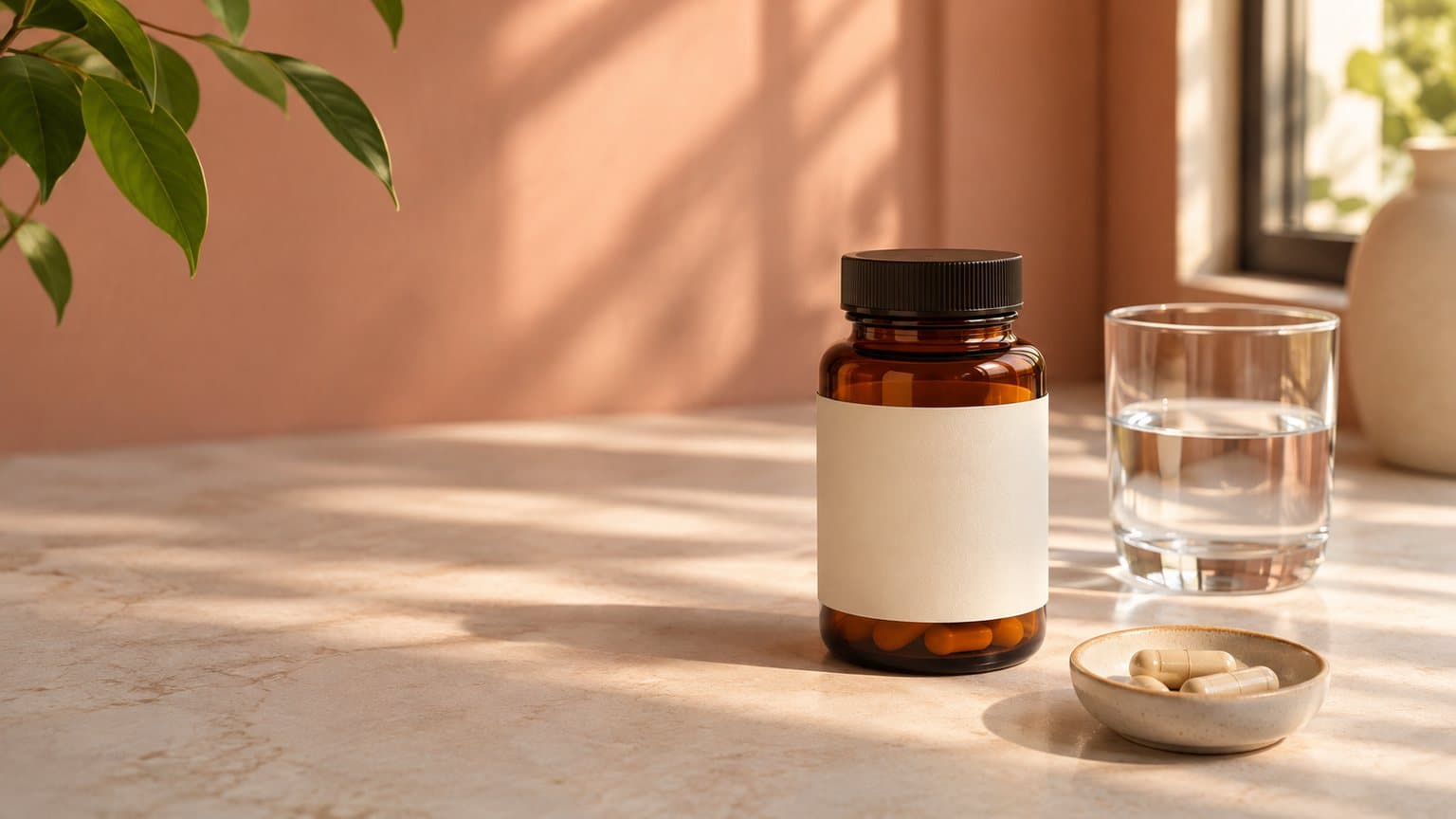
For this post, we made the start of an ingredient close-up. A still of an amber bottle with a blank label cost 1 credit. Turning that still into a 5-second clip cost 5 credits. The camera moved around the bottle, the label turned out of view and the glass of water slid behind it. As we read the frames, the capsules you can see at the bottom of the bottle in the first frame are gone by the third, so the clip ends on a bottle that looks empty.
On November 15, 2026, we read six of the articles on the first page of Google's results for "supplement facebook ads". We also read the FTC's section on consumer endorsements, as the Government Publishing Office prints it, and checked our own prices. We made the still and the clip in our own Novoads workspace and didn't run an ad anywhere. We didn't read Meta's own ad policy pages, so nothing here says what Meta's review accepts or turns down.
Five Supplement Ads a Small Brand Can Make, and Where AI Stops
Landing Partners, a paid ads agency, lists "Five creative formats that work consistently" in a supplement guide dated June 25, 2026. Mega Digital, an ad agency, tells brands to "Highlight Limited-Time Offers and Discounts" and to "Feature Customer Testimonials and Success Stories." What AI does well in each of the five below, and what each one shouldn't show, is our own reading rather than the agencies'. For Facebook ads beyond supplements, see the campaigns Meta documented, sorted by format.
The morning routine clip
Landing Partners lists "UGC testimonials framed as routine content" among its five, with "What I take every morning" as an example. The ad shows where your capsules fit into a day, so a viewer can picture the bottle on their own counter.
- AI does this well from your own bottle photo, with the counter, a glass of water, light moving across the label, and room for a caption with the serving your label lists.
- It shouldn't show an AI presenter saying they take your capsules every morning. That would present them as a buyer, and we get to what the Guides say about that further down.
- Keep any result out of it, whether it's energy, sleep or a smaller waist.
The ingredient close-up
Landing Partners calls this the "ingredient hero creative," a "Close-up of the product with clean benefit copy." It's the ad for a new formula's launch week, with the bottle filling the frame and your lead ingredient on screen at the amount your label lists.
- AI handles a slow move around a bottle well, and you add the ingredient line as text.
- It shouldn't add a seal, a badge or a certification your bottle doesn't carry. Mega Digital tells brands to "Include badges or certifications," with "GMP-certified" among its examples. Our reading is that only the marks on your own label belong in the ad.
- Check every frame against your bottle before the ad runs. Our own clip, further down, shows why.
The subscribe-and-save or bundle offer
Mega Digital's list includes "Promote Bundled Supplement Packages," and Landing Partners gives "Subscription with a first-order discount" as an offer for people who already know the product. This is the ad for the week your subscribe-and-save offer goes live.
- An AI presenter can read the offer and the day it ends, and a clip made from your bundle photo can carry the product shot.
- It shouldn't show a price, a discount or an end date that isn't live in your store, and it shouldn't promise a result by a date.
The 15-second explainer
Landing Partners writes that "A 15-second video explaining what adaptogens do builds enough trust for a retargeting click," and adds that it rarely converts cold traffic on its own.
- An AI presenter reads a script you've already cleared, and you can test several versions with different opening lines.
- The presenter shouldn't be dressed up as a doctor, a nutritionist or any expert who doesn't exist or never looked at your product. Mega Digital suggests "testimonials from healthcare professionals or nutritionists," and our reading is that only one who actually reviewed your product counts.
- Keep out any line that says the product treats, cures or prevents a disease.
The customer's story
Mega Digital tells brands to feature customer stories, and LeadEnforce, a Facebook audience targeting tool, says customer stories "should be about lifestyle improvements rather than guaranteed results."
- AI adds little here beyond captions and music on a clip your buyer sent you.
- It shouldn't make up a customer, a body change or a before and after.
- The story ad we'd make uses the parts of her review that aren't a result, like why she picked your brand, how the capsules fit into her morning and how the subscription works. Her weight loss stays out, for reasons we cover in the section on the Guides below.
Making the Five in Novoads From Your Own Bottle Photo
Novoads makes the video file, and you run the ad from your own ad account. You can start from your product photo or from an AI presenter who reads your script. The same photo can start a Pinterest ad as well, and our Pinterest post takes you through one, plus the AI mark Pinterest asks for.
A clip that opens on your product photo
- Open the Video tab and choose Kling 3.0 as the model.
- Drop your product photo on the box that reads "Drop a start frame or click to upload." Once it's attached, the editor shows "The video starts on this picture."
- Describe the camera move, set the length and send it with the round up-arrow button.
A 5-second Kling 3.0 clip costs 10 credits. Omni Flash and Wan 3.0 can open a clip on your photo too, once you set their switch to "Start / End Frames" instead of "Reference". In the editor, Seedance 2.0 and Seedance 2.0 Mini use your photo only as a reference (you name it in the prompt as @Image1), so the clip draws on your picture but doesn't open on it.
The still below stands in for your own product photo. We made it with GPT Image 2.6 Sunburst for 1 credit and gave it a blank label instead of a brand.
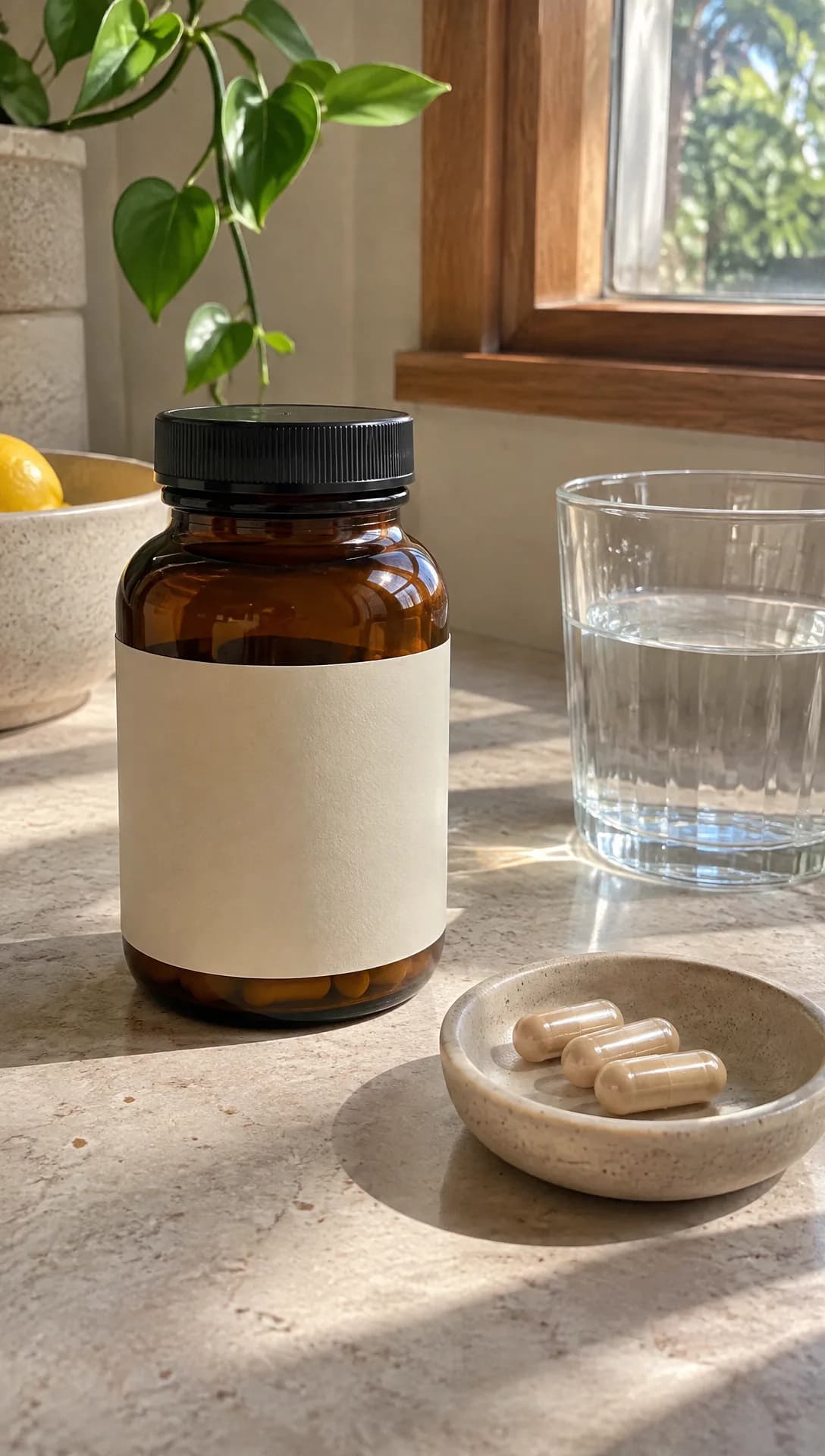 Made in Novoads with GPT Image 2.6 Sunburst · an amber bottle with a blank label beside water and capsules, shot like a small brand's own product photo · stands in for your own photo · 1 credit · 2026-11-15
What our clip did with that still
Our clip didn't go through the editor. Instead, we used our own connector for AI assistants, which can open a Seedance 2.0 Mini clip on a picture. It ran 5 seconds at 720p with the sound off. It cost 5 credits.
The stripes of sunlight from the window stayed put on the counter while the camera moved. But the capsules vanish by the third frame, and if this were your ad, we'd redo the take, because the bottle on screen should be the one you ship.
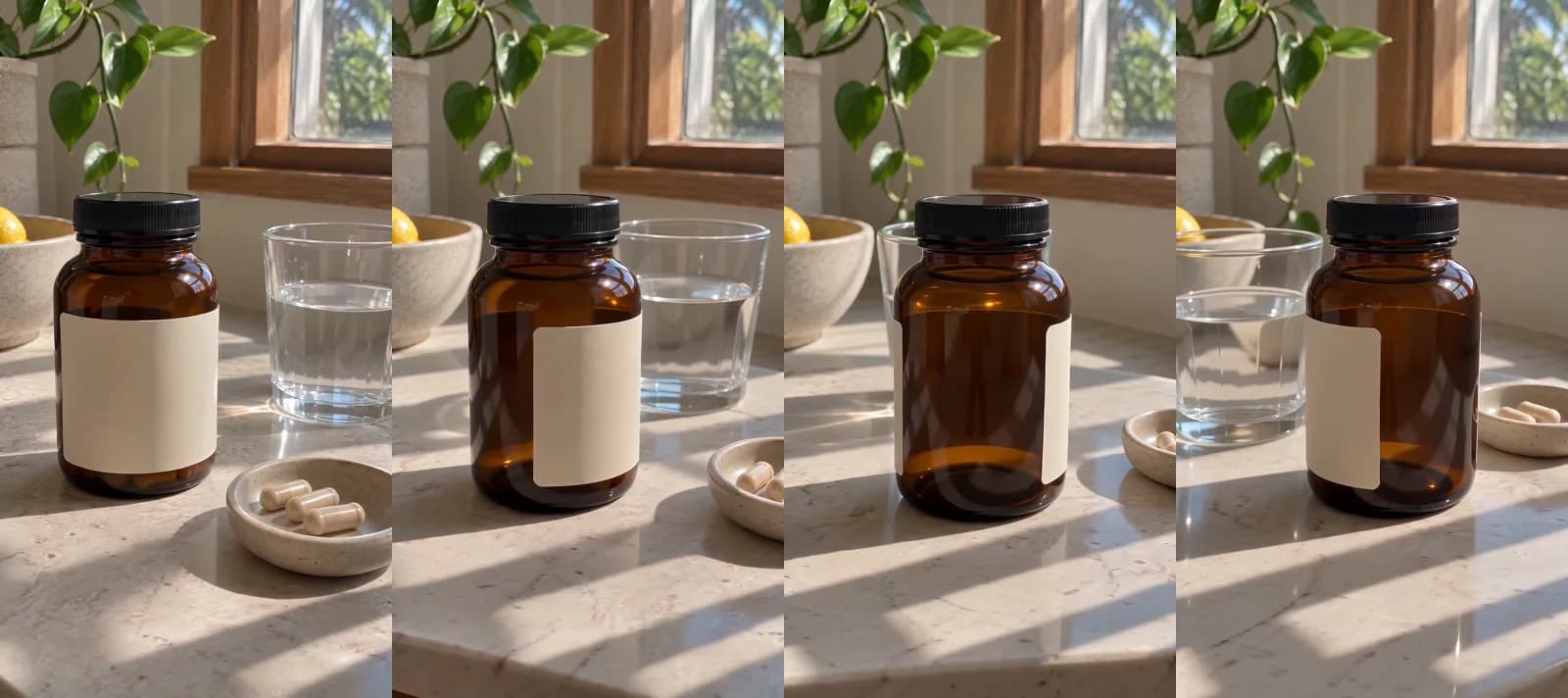 Made in Novoads with Seedance 2.0 Mini · the bottle still as the start picture, the camera moving around the bottle, 5 seconds at 720p, sound off · 5 credits · 2026-11-15
The same approach works for the rest of your store, and our ecommerce video ad examples show it on other products. To get from one photo to a finished ad, see our guide to making product videos with AI.
An AI presenter for the offer and the explainer
- Open Talking Actors and choose "Add actors" to pick a presenter from the library.
- Type the script in the box that reads "Write what the actor will say..."
- On the price line, keep the default 720p or switch to 480p for half the credits.
- Send it with the same round up-arrow button.
You get back a video of the presenter saying your script, with voice and lip-sync. Captions are a separate step on the finished video, and the Karaoke style costs 0 credits in the app.
A stock presenter from the library has empty hands, so your bottle won't be in the shot. Cut to your bottle clip to show the product. The presenter is an AI actor and not a buyer, so the script should speak for the brand ("here's what's in our new formula") rather than as someone who takes it ("I take two every morning").
What the Five Ads Cost in Credits and Dollars
Prices as of November 15, 2026. Novoads is paid from the first month. Every plan, including the larger Ultra ones, is on our pricing page.
- Starter is $15 a month for 200 credits, billed monthly only.
- Plus is $49 a month for 1,000 credits. Billed yearly, it comes to $39 a month.
- Ultra 3,000 is $129 a month. Billed yearly, it's $99 a month.
| What you make | Credits | Starter | Plus | Ultra 3,000 |
|---|---|---|---|---|
| AI presenter, up to 60 seconds, 480p | 100 | $7.50 | $4.90 | $4.30 |
| AI presenter, up to 60 seconds, 720p (the default) | 200 | $15.00 | $9.80 | $8.60 |
| Kling 3.0 clip that opens on your photo, 5 seconds | 10 | 75 cents | 49 cents | 43 cents |
| Seedance 2.0 clip, 5 seconds at 720p | 23 | about $1.73 | about $1.13 | about 99 cents |
| Seedance 2.0 Mini clip, 5 seconds at 720p | 5 | about 38 cents | about 25 cents | about 22 cents |
| GPT Image 2.6 still, medium quality | 1 | about 8 cents | about 5 cents | about 4 cents |
| Karaoke caption style, in the app | 0 | 0 | 0 | 0 |
We worked out the dollar columns ourselves by multiplying the credits by what one credit costs on each plan. A credit works out to $0.075 on Starter and $0.049 on Plus. On Ultra 3,000, it's $0.043. A presenter read is billed per started minute, so a short read costs as much as a full minute.
What the explainer costs in full
The explainer we'd make first pairs a 480p presenter read with a 5-second Seedance 2.0 clip that uses your bottle photo as its reference. The read is 100 credits and the clip is 23. Together that's 123 credits.
On Starter that comes to about $9.23, and on Plus about $6.03. On Ultra 3,000 it's about $5.29.
- A Starter month covers one of these ads, with 77 credits left over.
- A Plus month covers eight, with 16 left over.
- An Ultra 3,000 month covers 24, with 48 credits left over.
If you open the clip on your photo with Kling 3.0 instead, the same ad comes to 110 credits. Those prices cover one take of each piece. For a longer spot, our post on AI commercials adds up what one costs to make.
What a creator's video costs, from one platform's rate guide
Launchpoint says it connects health and wellness brands with vetted UGC creators, and it updated its rate guide for that vertical in March 2026. The guide says UGC creators there "typically cost between $250 and $900 per video asset, depending on their ability to navigate compliance and usage rights."
That price is for a person filming your product, and the guide ties it to compliance and usage rights, so it isn't a like-for-like comparison with an AI clip of your bottle.
What the FTC's Endorsement Guides Say About a Buyer's Result
The rule the ranking articles leave out is in section 255.2 of the FTC's Endorsement Guides. We read it in the Government Publishing Office's edition of the Code of Federal Regulations, revised as of January 1, 2026. None of the six articles we opened quotes it, and none says a "Results not typical" line falls short.
The Guides are the FTC's reading of how Section 5 of the FTC Act applies to ads that use endorsements and testimonials. The current version took effect on July 26, 2023. The Federal Register notice that adopted it says "the Guides are not regulations" and that they "are advisory in nature." The readings after each part below are our own.
A buyer's result likely reads as typical
Paragraph (b) is the one a customer's story runs into. It says an ad with a buyer's experience "on a central or key attribute of the product will likely be interpreted as representing that the endorser's experience is representative of what consumers will generally achieve." If you can't back that up, the Guides say "the advertisement should clearly and conspicuously disclose the generally expected performance in the depicted circumstances."
The typical figure needs backing of its own, because "the advertiser must possess and rely on adequate substantiation for that representation." And a disclosure only counts if it changes how the whole ad reads. In the Guides' words, "To be effective, such disclosure must alter the net impression of the advertisement so that it is not misleading." Paragraph (a) adds that glowing reviews don't back up a claim on their own, since "Consumer endorsements themselves are not competent and reliable scientific evidence."
For a supplement, the key attribute is usually what it does for the body. So by our reading, a buyer saying she lost weight on your capsules will likely be taken, under the Guides, as what your buyers generally get.
Why "Results not typical" isn't enough
The clearest example in the Guides is about heat pumps rather than supplements. Three homeowners in the ad say their monthly bills dropped after they installed one. But in the example, "fewer than 20% of purchasers will save $100 or more." The Guides say a line like "Results not typical" "is insufficient to prevent this ad from being deceptive," because people still read the savings as what they can expect.
The Commission also tested ads with that line and with a stronger one, and "Neither disclosure adequately reduced the communication that the experiences depicted are generally representative." The Guides leave one opening. An advertiser with reliable empirical testing showing that its ad with such a disclaimer isn't deceptive "will avoid the risk of the initiation of such an action in the first instance." In place of the disclaimer, the Guides offer the typical result, stated plainly, as in "the average homeowner saves $35 per month."
Their cholesterol example goes further. There, the ad discloses the average drop from a clinical study while its endorsers claim much bigger ones, and it still "would be deceptive" without competent and reliable scientific evidence for the specific results they claim.
The weight-loss example, one line that works and four that don't
The Guides' weight-loss example comes closest to a supplement ad. In it, a woman in before-and-after pictures says "I lost 50 pounds in 6 months with QRS Weight-Loss." If buyers can't generally expect that, the Guides say the ad should disclose what they can expect to lose. The example's disclosure reads "women who use QRS Weight-Loss for six months typically lose 15 pounds."
The Guides call four other lines inadequate.
- A per-week average. "Average weight loss is 1-2 pounds per week" falls short because it doesn't tell a buyer what six months brings.
- A wide range. "most women who use QRS Weight-Loss lose between 10 and 50 pounds" is too broad to tell users what to expect.
- A mean pulled up by a few big losses. If the mean is 15 pounds but the median is 8, the mean misleads. The Guides' wording for that case is "the typical user loses 8 pounds."
- A typical figure counted only among the people who stay. The example's line gives 35 pounds for users who stick with the program for 6 months. Only one-fifth of the people who start make it that far, so the line "does not communicate what the typical outcome is for users who start the program."
Paragraph (c) and an AI presenter
Paragraph (c) is the one an AI presenter runs into. It says ads that present people as actual consumers "should utilize actual consumers in both the audio and video, or clearly and conspicuously disclose that the persons in such advertisements are not actual consumers of the advertised product." For your ads, our reading is that the AI presenter speaks for the brand, never says it takes your capsules and never shows a result.
What this means for the five ads
Of the five ads, only the customer's story puts a buyer's result in play, and our version leaves the result out. The other four stay clear of it as long as the presenter speaks for the brand. If you ever do want a result in an ad, the section says what should go next to it, starting with a typical figure you can back up.
This is our reading of the Guides and isn't legal advice. The section itself is the first source listed below. If you also run these ads on TikTok, our post on what TikTok counts as misleading covers its rules for AI-made ads, and our gym ads guide covers its policy on weight-loss claims.
Start With the Bottle You Already Ship
Make the close-up first. It costs 10 credits on Kling 3.0, it starts from a photo you already have, and nothing in it is a buyer's result. Check every frame against your bottle, add the presenter for the subscribe-and-save week, and save the customer's story for last, built from her own words about the product.
Turn your bottle photo into a supplement ad
Upload the photo, open the clip on it with Kling 3.0, describe the camera move and download the clip for your own ad account. Novoads is paid from the first month, and every plan is on the pricing page.
See plans and creditsIf this is your first AI-made ad, our AI ads guide walks you through the process in five steps.
Frequently Asked Questions
Can an AI presenter say it takes my supplement?
Not by our reading of the FTC's Endorsement Guides. They say ads that present people as actual consumers should use actual consumers in both the audio and the video, or clearly and conspicuously disclose that they aren't. An AI presenter isn't a buyer, so it speaks for your brand and never says it takes your capsules or got a result from them.
Is 'Results not typical' enough under a supplement testimonial?
Not in the Guides' own example. Section 255.2 calls a heat pump ad's 'Results not typical' line insufficient to keep the ad from being deceptive, and says the ad should clearly disclose what buyers generally achieve instead. The Guides add that an advertiser whose reliable empirical testing shows the ad with such a disclaimer isn't deceptive 'will avoid the risk' of an FTC action.
How much does a supplement ad cost to make with AI?
In Novoads, an AI presenter read at 480p costs 100 credits. A 5-second Seedance 2.0 clip of your bottle adds 23. Together that's 123 credits, or about $9.23 on Starter. On Plus, it comes to about $6.03. Prices are as of November 15, 2026.
Does the FTC's section on customer results mention supplements?
Not by name. The word doesn't appear in section 255.2 of the edition revised as of January 1, 2026. The section's examples include a baldness treatment, heat pumps, a cholesterol-lowering product and a weight-loss product. Our reading is that a buyer's result with your supplement is the same kind of endorsement, one 'on a central or key attribute of the product.'
Key Takeaways
- The articles that rank on Google for supplement Facebook ads point to five kinds of ad. They're the morning routine clip, the ingredient close-up, the subscribe-and-save offer, the 15-second explainer and the customer's story.
- In Novoads, a 5-second Kling 3.0 clip that opens on your bottle photo costs 10 credits. Omni Flash and Wan 3.0 can do the same once you pick 'Start / End Frames' instead of 'Reference'.
- The explainer we priced pairs a 480p presenter read with a 5-second Seedance 2.0 clip. It comes to 123 credits, or about $9.23 on Starter. Prices are as of November 15, 2026.
- The FTC's Endorsement Guides say an ad with a buyer's result on a key attribute will likely be read as what buyers generally achieve. Their heat pump example calls a 'Results not typical' line insufficient.
- The Guides say ads that present people as actual consumers should use actual consumers or clearly disclose that they aren't. So in our reading, your AI presenter speaks for the brand and never plays a buyer.