Bad AI Ads: 12 That Drew Backlash, What Went Wrong, How to Avoid It
Twelve AI-made ads that drew a backlash, from Toys"R"Us to REI, with what each brand and its critics said, what happened next, and what a retake costs in Novoads.

Mauricio Valdivia
·17 min
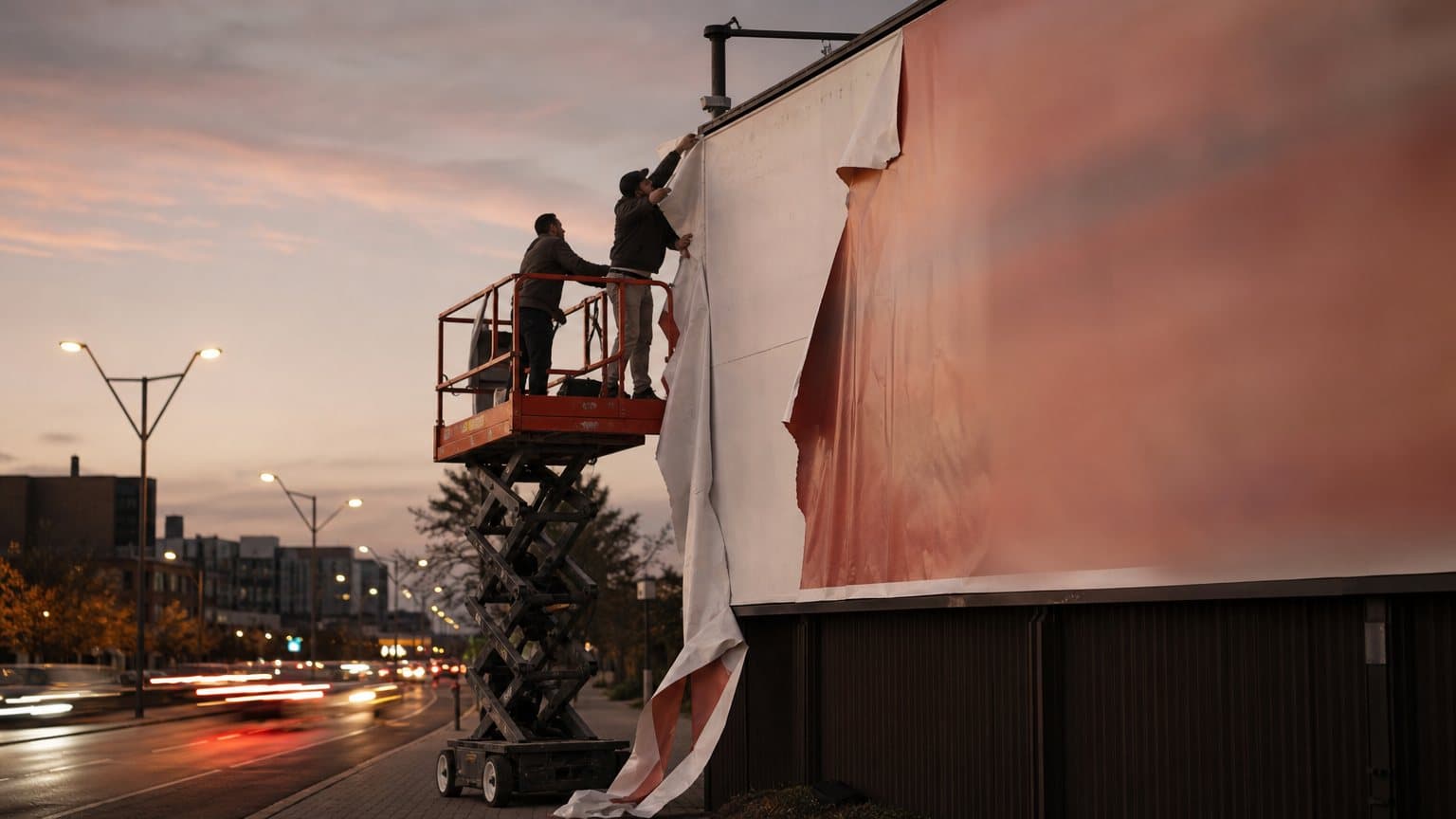
McDonald's Netherlands Pulled Its AI Christmas Ad Three Days After It Went Up
On December 6, 2025, McDonald's Netherlands put a 45-second Christmas ad made with generative AI clips on its YouTube channel. BBC News reports the company pulled it on December 9. On December 10, a McDonald's spokesperson told Fox News Digital that "we have decided to remove our AI-generated Christmas advert," and added, "This moment serves as an important learning as we explore the effective use of AI."
It's one of 12 AI-made ads in this post that drew a public backlash. The oldest ran in June 2024 and the newest in June 2026. For each, we report what the brand or its maker said the AI did, what critics said, and what happened next. On November 9, 2026, we read every page this post quotes. The same day, we opened 3 of the top 10 Google results for "bad ai ads," and none of them sorts AI-made ads by what went wrong, with a dated, named source for each.
We didn't make, run or test any of these ads, so everything we say about them comes from the brands', makers' and named critics' own words. The prices near the end are our own, from Novoads' price tables and two of our renders.
The Twelve Ads at a Glance
An ad can draw more than one kind of complaint, so some rows list several.
| Ad | Who ran it | When | What critics objected to | What happened next |
|---|---|---|---|---|
| The Origin of Toys"R"Us | Toys"R"Us Studios | June 2024 | Faces or hands, physical details, what AI replaced | Defended by its producer |
| Holidays Are Coming | Coca-Cola | November 2024 | Physical details, what AI replaced | Kept, and followed by a new AI version in 2025 |
| Come Back Stronger | Volvo, Saudi Arabia | February 2025 | The idea | Pulled |
| AI models in a Vogue ad | Guess | August 2025 issue | What AI replaced, AI in small print | No reply from Guess found |
| Vans collaboration posts | J.Crew | August 2025 | Faces or hands, physical details, what AI replaced, AI not said | Captions edited, no removal reported |
| An AI presenter on TikTok | Vodafone Germany | September 2025 | Faces or hands, AI confirmed only in comments | No removal reported |
| A top ad swapped by Meta's AI | True Classic | October 2025 | A platform's AI changed the ad | No later report found |
| Holidays Are Coming | Coca-Cola | November 2025 | Physical details, what AI replaced | Kept, and defended by its maker |
| DeVain bag project | Valentino | December 2025 | What AI replaced, the tone | No reply from Valentino found |
| Christmas ad | McDonald's Netherlands | December 2025 | Faces or hands, what AI replaced, the idea and tone | Pulled |
| An AI ad on social media | Pelicana | May 2026 | The idea | Pulled, with an apology |
| Van Rysel bike ad | REI | June 2026 | Physical details, a platform's AI changed the ad | Pulled, with an apology |
Counted by kind, the fourth column holds 25 complaints.
- 7 drew complaints about what the AI replaced (artists, actors, models or crews)
- 5 about physical details, such as truck wheels, bike parts or shirt stripes
- 4 about faces or hands
- 4 about the idea or the tone
- 3 about AI that wasn't disclosed up front, or only in small print
- 2 about a platform's AI changing the ad after upload
In 10 of the 12, the brand or its maker said AI made or changed the ad, in a statement or on the ad itself. J.Crew and Pelicana answered their critics without using the word. What happened next splits four ways.
- 4 were pulled (Volvo's, McDonald's Netherlands', Pelicana's and REI's)
- 5 were defended or kept running (Toys"R"Us', both of Coca-Cola's, J.Crew's and Vodafone's)
- 2 drew no brand reply that we found (Guess and Valentino)
- 1 has no later report that we found (True Classic)
We kept to ads whose brand or maker spoke about them, so ads that critics only suspect were made with AI aren't in the twelve. Critics allege Skechers used AI, for example, and the company hasn't confirmed it, as our post on Skechers' ads explains. Our posts on Kalshi's AI ads, Byrna's, Trivago's and AI Super Bowl commercials tell other brands' stories.
Five Brand Films Made With AI on Purpose
Toys"R"Us, The Origin of Toys"R"Us (June 2024)
Toys"R"Us Studios premiered its brand film at the 2024 Cannes Lions Festival. Its release of June 24, 2024, called it "the first-ever brand film using OpenAI's new text-to-video tool, Sora," made by Native Foreign, with Nik Kleverov directing and Kim Miller Olko as executive producer. The release said the film "was almost entirely created with Sora, with some corrective VFX and an original music score composed by Aaron Marsh." It said the team took "just a few weeks," but NBC News reported Kleverov saying that "the team worked on and off over the course of three months."
Olko told Digiday some iterations "didn’t experientially fit into the human experience like it would in real life." Andy Kluthe argued on X that hiring actors would have made the video "look a thousand times less uncanny," NBC News reported. Theo Priestley wrote on X, "They're clearly too cheap to use real creators and child actors," and Decrypt reported that Allen T. pointed out "problems in depicting details like hands and keeping a character's appearance consistent from scene to scene." Digiday noted that "some noticed inconsistencies in the AI-generated versions of Lazarus."
Toys"R"Us stood by the film. Olko told NBC News on June 27, 2024, "It was a test. I think it was successful."
Coca-Cola, Holidays Are Coming (November 2024)
NBC News reported that Coca-Cola's 2024 holiday film "was meant to pay homage to the company’s 1995 commercial," which "featured similar imagery, but with human actors and real trucks." A Coca-Cola spokesperson told NBC News, "This year, we crafted films through a collaboration of human storytellers and the power of generative AI." Citing Forbes, NBC said it was "created by three AI studios," Secret Level, Silverside AI and Wild Card.
Jason Zada of Secret Level said one scene with an AI-generated squirrel took "a couple hundred" iterations to get right, The Decoder reported. PJ Pereira, Silverside AI's CEO, said his company "created more than 10,000 individual images and 5,000 video segments for the project."
NBC News reported users calling the film "soulless" and "devoid of any actual creativity." Alex Hirsch, who created Gravity Falls, joked on X that Coca-Cola is red because it's "made from the blood of out-of-work artists." A year later, Business Insider's Lara O'Reilly wrote of the trucks that "a criticism of last year's ad was that they appeared to glide across the road."
Coca-Cola kept the film. Adweek reported that "The ad received a perfect 5.9 score from System1 in both the U.S. and U.K.," and in November 2025, Coca-Cola's Pratik Thakar told TODAY the "film performed exceptionally well and was a success with customers."
Volvo Saudi Arabia, Come Back Stronger (February 2025)
According to Adweek, Dubai-based Lion Creative made the spot for Volvo's Europe, Middle East and Africa division and Electromin, Volvo's Saudi distributor, and it "is the first ad for Volvo created solely with artificial intelligence." Jalopnik gave its title as "Come back stronger." Communicate Online quoted Petromin's chief marketing officer, Hussein M. Dajani, saying, "By harnessing AI, we have transformed the way stories are told," and Lion's founder, Osama Siddiq, saying, "With AI, we’ve shifted gears in how brands tell stories." Carscoops, citing Adweek, reported Siddiq's view that "showing the car would have distracted from the narrative."
Critics read it another way. On March 9, 2025, Joe Foley's Creative Bloq headline read "Volvo's shocking AI advert looks like a bad student project it couldn't afford to finish." Jalopnik's Collin Woodard pointed to "the part where the car ad didn't include any cars."
On March 11, 2025, Volvo USA told Jalopnik, "We are aware of the ad in Saudi Arabia. It was a local initiative, not in line with Volvo Cars' global guidelines. The ad is being taken down/withdrawn." The statement doesn't mention AI. Creative Bloq had already noted that "Volvo has turned off comments on the YouTube video."
Coca-Cola, Holidays Are Coming (November 2025)
Coca-Cola came back on November 3, 2025. Its media center described "two AI-driven reimaginations of the classic 1995" spot, made with the studios Secret Level and Silverside AI. Pratik Thakar said on that page that "we controlled every cinematic detail, from camera angles to physics-driven realism," and that "the music used in the films was performed and sung by real artists." TODAY reported that the team "managed to churn out and carefully refine over 70,000 video clips."
One viewer comment quoted by TODAY said the new film would never be the "festively warm and comforting coca cola christmas commercial" of the 1990s. Business Insider's Lara O'Reilly wrote that the trucks' wheels "also appeared to change in quantity as the ad rolled on."
In a statement Business Insider quoted, Silverside AI's PJ Pereira said that once Coca-Cola recognized AI as the future, "they stopped debating whether it's perfect or not." System1 gave the film "a 5.9-Star Rating" on November 20, 2025, and wrote that "using AI doesn’t hurt ordinary viewers’ enjoyment of the ad at all," while noting "a few negative comments criticising it."
McDonald's Netherlands, Christmas Ad (December 2025)
BBC News reported that the ad was "created for McDonald's Netherlands by Dutch company TBWA\Neboko and US production company The Sweetshop." Fox Business reported it was set to "It’s the Most Wonderful Time of the Year," with lyrics rewritten to call the season the "most terrible time of the year."
Melanie Bridge, The Sweetshop's CEO, defended the work in statements that have since come down, and their figures don't match. TechRadar quoted her saying the team made "thousands of takes" and that "This wasn't an AI trick. It was a film." Futurism's quote reads, "For seven weeks, we hardly slept, with up to 10 of our in-house AI and post specialists at The Gardening Club." Fox Business, citing the New York Post, quoted a since-deleted comment, "Ten people, five weeks, full-time."
The statement to Fox News Digital said, "The commercial was produced for McDonald’s Netherlands, but we have decided to remove our AI-generated Christmas advert," and that "we recognize that, for many of our guests, the season is 'the most wonderful time of the year.'" Fox calls the speaker "The fast-food chain" and a spokesperson, while BBC News and AFP say their statements came from McDonald's Netherlands.
BBC News reported that "viewers criticised the film's uncanny-looking characters and large number of stitched together clips." Named critics went further.
- TechRadar's Eric Hal Schwartz listed "Balloon hands, fireball cookies, and eyes a little too wide."
- Film critic Richard Roeper called it "clumsily shot, poorly edited, and inauthentic," Fox Business reported.
- Emlyn Davies of Bomper Studio asked on LinkedIn, per AFP, "What about the humans who would have been in it, the actors, the choir?"
- Bobby Stapleton wrote on X, as NBC News reported, "Regardless of being made with AI, this is just a bad idea for a commercial."
Fox Business reported that "McDonald's initially removed comments for the video before eventually making it private days later." BBC News puts the removal on December 9. Looking back on December 18, 2025, Andrew Witts of Studio 36 Digital told Creative Bloq that "the AI-generated ad simply missed the emotional mark."
Five Campaigns on Instagram, TikTok and in Print
Guess in Vogue (August 2025)
Good Morning America reported that "TikTok has erupted over the August 2025 issue of the famed fashion magazine," over a Guess ad with AI-generated models. Seraphinne Vallora, an AI marketing agency, made it. Its founders told the BBC, as PC Gamer reported, that "Guess co-founder Paul Marciano asked the marketing agency to produce AI models to feature in the brand's upcoming summer campaign." They said a job like this can take "a month from initial concept to completion" and cost "a client brand like Guess somewhere around the low end of six figures."
The ad's credit line read "Produced by Seraphinne Vallora on AI." PC Gamer's Jess Kinghorn called it "a teeny tiny disclaimer close to the magazine's spine." Lifestyle creator Payton Wickizer said, "The fact that they are using fake women in their magazines," and Business Insider summed up posts saying "the use of AI imagery portended bad news for creative industry jobs."
"ABC News reached out to Vogue and Guess for comment on the ads but did not immediately receive a response," and we found no Guess statement. Seraphinne Vallora co-founder Valentina Gonzalez defended the work on Good Morning America, saying, "We are here to co-exist together."
J.Crew and Vans on Instagram (August 2025)
On August 26, 2025, Blackbird Spyplane reported that J.Crew's Instagram posts for "the Vans collab J.Crew is promoting" came from a "self-described “AI photographer” called Sam Finn." It added that "J.Crew does not acknowledge in the captions that these images are A.I.-generated or -manipulated." Futurism's Maggie Harrison Dupré pointed to "one man’s foot facing backwards and another’s hands melting into the handlebars of his bike," and to "misaligned stripes on a rugby shirt." 6abc reported that "Critics are concerned the AI models are cutting out workers who would otherwise get paid."
Blackbird Spyplane later updated the post, writing, "J. Crew just edited the captions of the three posts, which still don’t mention AI but now credit Finn with the “digital art.”" J.Crew told The Cut, as Futurism reported, "This partnership with Sam Finn Studio is one of many examples of how we engage artists of all genres to interpret our brand and experiment with different art mediums." That reply doesn't use the word AI, and the pages we read report no removal.
Vodafone Germany's AI Presenter on TikTok (September 2025)
On September 8, 2025, The Verge's Jess Weatherbed wrote about the presenter in Vodafone Germany's TikTok ads, pointing to "the unnatural style and movement of her hair, the way her moles disappear, and the uncanny valley vibe of her facial expressions." She added that "Vodafone confirmed my suspicions in its video comments." In The Verge's machine translation, Vodafone's comment said, "AI is so much a part of everyday life these days that we also try it out in advertising." SmartCompany's translation reads, "We’re trying different styles. AI is so much a part of everyday life now that we’re trying it out in advertising too."
One commenter, in The Verge's translation, asked for "a real person in front of the camera." We found nothing on who made the ads, whether they carried a label or whether they came down.
Valentino's DeVain Bag Project (December 2025)
BBC News reported on December 2, 2025, that Valentino had posted what it called a "digital creative project" promoting its new DeVain handbag, in a post "which has a label to say it was made using AI." The Nod Mag wrote that the project "featured the works of nine experimental artists," among them "a motion graphic by the production house Total Emotional Awareness."
The BBC found many comments criticizing its AI use as "cheap" and "lazy," and some that called on the company's marketing department to "read the room." Anne-Liese Prem of Loop told the BBC that the main issue "is the perception of what the technology replaces." Rebecca Swift of Getty Images told Glossy on December 24, 2025, "Even full transparency about AI use wasn’t enough to win them over."
"The BBC has approached Valentino for comment," the BBC wrote. We found no reply from Valentino, and no report that the post came down.
Pelicana's AI Ad in South Korea (May 2026)
Korea JoongAng Daily reported on May 10, 2026, that "Local fried chicken brand Pelicana pulled an AI-generated advertisement." Users said the video "treated infidelity trivially," the paper wrote, and "The fact that it was AI-generated added another layer of criticism."
Pelicana wrote in an apology on Instagram, "We sincerely apologize for the discomfort and disappointment caused by the recently uploaded content." It said, "The content was posted without sufficient consideration of the appropriateness of expression and social awareness during the production process," and the paper reported that it "pledged to strengthen its content planning and review processes to prevent a recurrence." The apology, as quoted, doesn't use the word AI, and the pages we read don't say who made the ad.
Two Ads a Platform's AI Changed After Upload
True Classic on Meta (October 2025)
Business Insider's Lara O'Reilly reported on October 29, 2025, that Bryan Cano, head of marketing at True Classic, found "Meta had switched out his top-performing ad" for one "with an AI-generated photo of a cheerful yet unnatural granny sitting in an armchair." Cano told Business Insider the ad ran for three days before customers alerted the brand, and that it "hadn't surfaced as one of the selected ads in its campaign preview." He added, "This doesn't just affect our relationship with customers, who were upset by this."
Meta told Business Insider, "Advertisers who use our full image generation feature have the opportunity to review the generated images before running their ad." Pieter Van der Auwera said Meta's previews "need to be opened one by one to check." In a December 2025 roundup, Business Insider reported that three advertisers had turned off Meta's AI settings, only to see Meta turn them back on. We found no report on what True Classic did next.
REI's Van Rysel Bike Ad (June 2026)
An REI spokesperson told Business Insider on June 24, 2026, "Meta auto-enrolled us in an AI personalization tool that produced an inaccurate and inappropriate alteration of a vendor-provided image in some of our ads." The spokesperson added, "We apologize for the confusion this caused," and Business Insider reported that "the company unenrolled from the Meta tool." Van Rysel North America said, "Any later alterations were not made by Van Rysel." Business Insider wrote, "Meta declined to comment when reached by Business Insider."
Carscoops' Stephen Rivers wrote that "the finished ad showed handlebars protruding from the saddle," and that "the left crank doesn't exist in the photo." Amity Rockwell, whose shoot the photo came from, wrote on Instagram, as Carscoops reported, "The thing is, this was an official shoot. That I got hired for."
PPC Land reported on June 26, 2026, that the ad "circulated on social media for approximately a week before being removed."
What Surveys and Ad Tests Found, and Where They Disagree
The studies we found don't agree, partly because they measure different things. Surveys ask people what they think of AI in ads, ad tests score finished ads, and field studies count clicks.
What People Say When They're Asked
- IAB and Sonata Insights published The AI Gap Widens on January 15, 2026. It found that "82% of ad executives believe Gen Z/Millennial consumers feel very or somewhat positive about AI-generated ads, nearly double the 45% of consumers who actually feel that way." The survey covered 505 young US consumers and 104 US ad executives, so it speaks for young Americans only.
- Kantar's Media Reactions survey of 21,300 consumers ran in 30 markets. Kantar wrote in March 2026 that "57% express concern about fake or misleading" AI-generated advertising. It also found that "Over half of consumers (56%) now say they feel positive toward GenAI, up from 47% the previous year." Kantar's pages don't give the exact question.
- Meltwater released a report with YouGov on April 21, 2026. It drew on "nearly 10,000 consumers across seven global markets." It found that "While 32% say they would trust brands less if content is AI-generated, 15% would trust them more."
What Ad Tests Scored
| Ad test | What it found | Its limit |
|---|---|---|
| Kantar's LINK database, as of March 2026 | AI-made ads scored a 54% average percentile, against 65% for ads made without AI | The page doesn't say how many ads |
| Kantar with Affectiva, November 2025 | Ads that used AI "more seamlessly performed better," but "the net positivity is lower" | "hundreds of ads," with no exact count |
| NielsenIQ, December 2024 | More than 2,000 viewers found AI ads less engaging and more "annoying," "boring" and "confusing" than traditional ads | No percentages on the page |
| System1, per Tom Roach in Marketing Week, November 2025 | 18 AI-made ads averaged 3.4 stars, against 2.3 across 123,000 video ads | A small sample, biased toward ads the industry had noticed |
NielsenIQ also found that the ads "elicited weaker memory activation in the brain, compared to traditional ads," and that "AI-generated ads successfully reinforced existing brand associations." Roach warned that "the sample of 18 ads we gathered is small and biased towards ads that have already caught the industry’s attention," and that "just over a third" came from "Jellyfish and other Brandtech Group companies." System1, which "rates ads on a scale from 1 to 5.9 stars," as Business Insider put it, also says that "Holiday ads generally score higher than ordinary ads," which applies to both Coca-Cola scores.
What Happened to Clicks
NYU Stern wrote on November 6, 2025, about a study by Anindya Ghose and co-authors. Visual ads made entirely with generative AI did best, it said, "increasing click-through rates by up to 19% compared to ads made by human experts." But "Telling consumers that an ad was made using genAI greatly reduced its effectiveness," it added, "causing a 31.5% decrease in click-through rates." The study looked at visual ads, and the write-up gives no sample size.
IAB's survey points the other way, since "73% said if they knew an ad was created with AI it would either increase or have no difference on their likelihood to purchase." One counts clicks and the other what people say, so neither settles it.
What Makers Chose to Show Instead of People
Greg Swan of FINN Partners told Digiday the Toys"R"Us film's dreamlike setting suited the tool, saying, "If this was a more lifelike concept, it simply wouldn’t have worked." Progressive released "Drive Like an Animal" on November 3, 2025, "leveraging the power of artificial intelligence (AI) in the production process." Marketing Dive wrote that "Animals fit the cartoonish aesthetic of AI better than humans," and Progressive's Meghan Walsh said, "We were looking at how it performed for the business, and it performed well." She gave no number.
For its own AI-made ad, "Google chose a turkey as its protagonist to avoid the uncanny valley pitfall," Sherwood News wrote. 9to5Google reported Google's view "that consumers don’t care whether an ad was generated," and that the upload carries YouTube's "Altered or synthetic content" disclosure.
How to Avoid the Complaints These Ads Drew
Nothing here guarantees an ad won't look AI-made. But for each kind of complaint there's something you control, and where nothing in Novoads helps, we say so.
Faces and Hands
Four of the twelve drew complaints about faces or hands.
- Check every face and hand in every take, at full size, before the ad goes out.
- Leave people out when the idea allows it, as Google and Progressive did.
- In Novoads, you pick a stock AI actor or make one from a picture you upload (the upload step says "Transform a picture into a talking actor"). Look at the face and hands before you use the take.
- Run several takes of the shot people will look at hardest, and keep the cleanest. Each take is a new run at the model's price, listed in the last section.
- For prompts that fix skin, light and motion, see our guide to making AI video look real, and our AI commercial guide for where AI commercials still go wrong.
Objects That Change From Frame to Frame
Five drew complaints about physical details, from truck wheels to bike parts.
- Start from a picture of the real product. In Novoads, Product-to-Ad turns an uploaded JPEG, PNG or WebP of up to 20 MB into an ad image for 1 credit.
- Give the video model a picture to work from. On our canvas, a Google Veo 3.1 or Kling 3.0 node takes a start and an end frame, and Omni Flash takes one first frame. Wan 3.0 takes a start and end frame or up to 9 reference pictures, and Seedance takes a reference picture.
- To put a product in a talking actor's hand, make a custom actor from a photo of someone holding it, since our stock actors' hands are empty.
- Keep clips short, and check each one for the object your buyer knows best.
A start frame sets only the first frame. Jill Asemota of Parallel Pictures told Glossy, "When models start moving, the product can change or warp."
What the AI Replaces
Seven of the twelve drew this complaint, more than any other kind, and nothing in Novoads answers it, because it's about whether to use AI at all. A clear label didn't settle it for Valentino either, by Rebecca Swift's account. Decide whether AI fits the brand before the first render, and see our guide to AI ads on when a creator still beats an AI ad.
The Idea and the Tone
Four of the twelve drew complaints about the idea or the tone, which no model fixes.
- Have a person read the script before anything renders. After its apology, Pelicana pledged stronger review.
- Andrew Witts told Creative Bloq to "Implement mandatory human review for all AI-generated creative" and to "Test AI concepts with real audiences before scaling."
- Test hooks on short, cheap clips before you pay for a long take, as our AI ads guide suggests. A cheap test shows what people click. It can't show what will upset them later.
Saying It Was AI
Three drew complaints that the AI wasn't disclosed up front, or only in small print, and the cases cut both ways. Guess's line sat near the magazine's spine, J.Crew's captions didn't say AI, and Vodafone confirmed it in the comments, yet Valentino's labeled post still drew "cheap" and "lazy." How you say it is your call, within each platform's and market's rules. Our posts on labeling AI-generated ads, AI ad label rules for 2026, TikTok's AI disclosure rules and Google's AI transparency labels cover those rules.
When the Ad Platform Changes Your Ad
True Classic and REI say Meta's AI altered their ads after upload. You make the ad in Novoads and run it in the ad platform, so the platform's AI settings are yours to check.
- Open the previews one by one before launch, as Pieter Van der Auwera described.
- Look again after launch, since advertisers told Business Insider that Meta turned those settings back on.
What One Retake Costs in Novoads
Prices as of November 9, 2026.
When a take comes back wrong, you run it again. In the Novoads library, only Veo videos have a Redo button, and its dialog says "This will generate a new video with the same settings." On any other model, a retake is a new run at the model's listed price, and our price tables have no separate price for a retake.
| Model | One take | Credits | On Plus | On Starter |
|---|---|---|---|---|
| Seedance 2.5 | 8 s at 720p | 56 | $2.74 | $4.20 |
| Seedance 2.0 | 8 s at 720p | 36 | $1.76 | $2.70 |
| Seedance 2.0 Mini | 8 s at 720p | 8 | about 39 cents | 60 cents |
| Google Veo 3.1 | 4, 6 or 8 s at 720p or 1080p | 72 | $3.53 | $5.40 |
| Kling v3 Pro (Kling 3.0) | 8 s | 16 | about 78 cents | $1.20 |
| Omni Flash | 8 s at 720p | 24 | $1.18 | $1.80 |
| Wan 3.0 | 8 s at 720p | 14 | about 69 cents | $1.05 |
| Talking actor | up to 60 s at 720p | 200 | $9.80 | $15.00 |
| Talking actor | up to 60 s at 480p | 100 | $4.90 | $7.50 |
The dollar columns are our arithmetic from the plans.
- Plus is $49 a month for 1,000 credits, so a credit costs $0.049.
- Starter is $15 a month for 200 credits, so a credit costs $0.075.
We read Zada's "a couple hundred" iterations as 200 takes. At 8 seconds and 720p each, our arithmetic at the Plus rate gives these totals.
- 1,600 credits ($78.40) on Seedance 2.0 Mini
- 2,800 credits ($137.20) on Wan 3.0
- 11,200 credits ($548.80) on Seedance 2.5
- 14,400 credits ($705.60) on Google Veo 3.1
Those are our prices for that many takes, not what any of these brands paid, and we found no per-take price from any of the makers.
Two of our own renders show what one take cost. They aren't ads, and they don't show that a clip won't look AI-made.
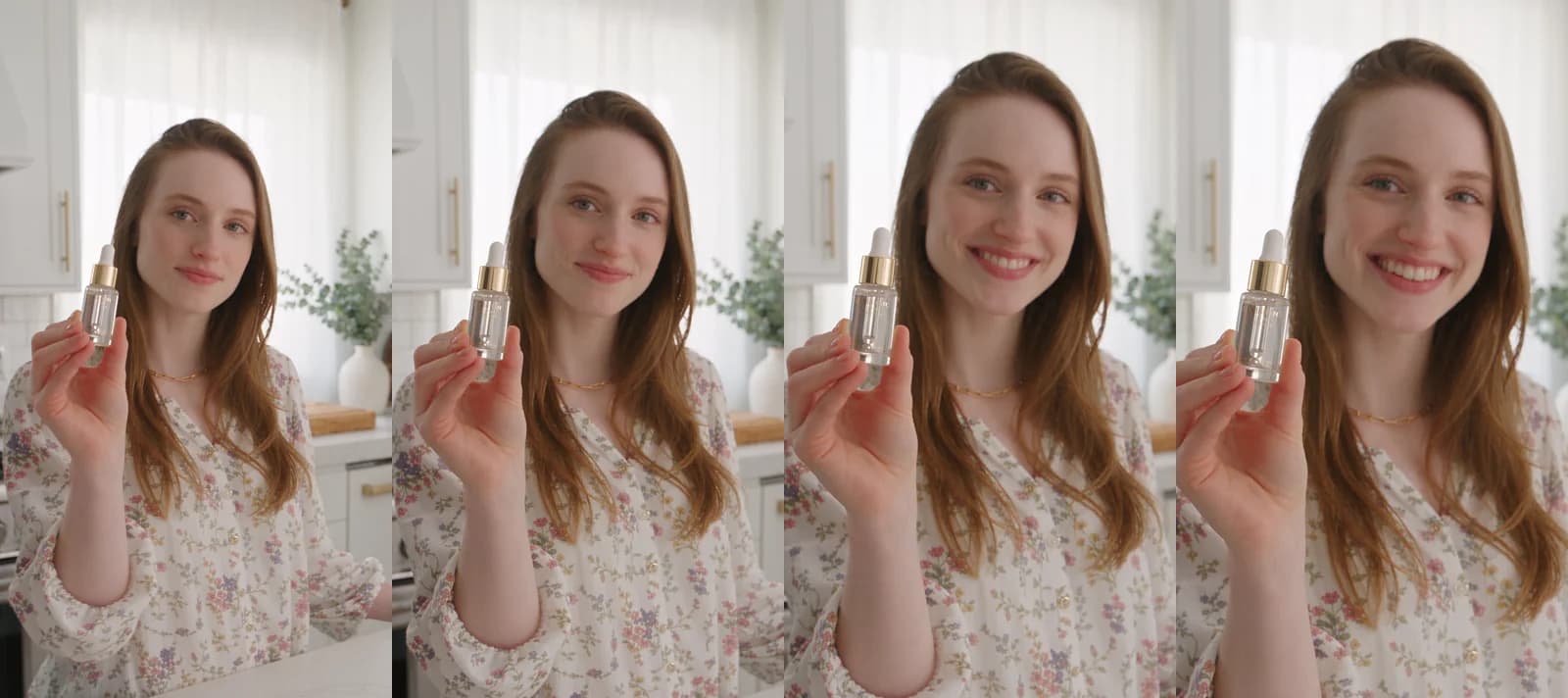
Made in Novoads with Seedance 2.5 · a one-line prompt, 5 seconds in 9:16 at 1080p, back in 8 minutes 38 seconds, 60 credits · 2026-09-21
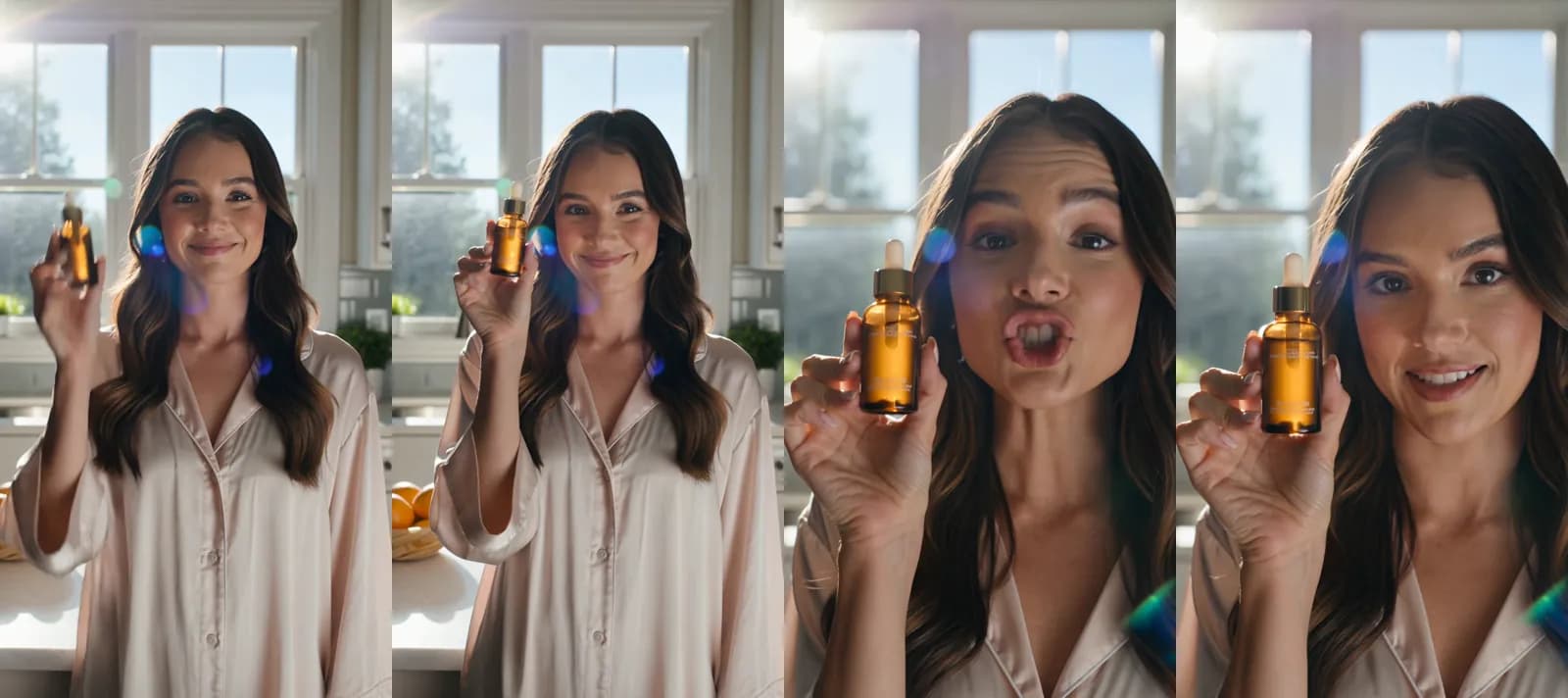
Made in Novoads with Kling 3.0 (Kling v3 Pro in our catalog) · a one-line prompt sent through our REST API, 5 seconds in 9:16, with the line "this changed my mornings" spoken word for word, 10 credits · 2026-09-30
- 60 credits for the Seedance 2.5 take, which is $2.94 on Plus and $4.50 on Starter
- 10 credits for the Kling 3.0 take, which is about 49 cents on Plus and 75 cents on Starter
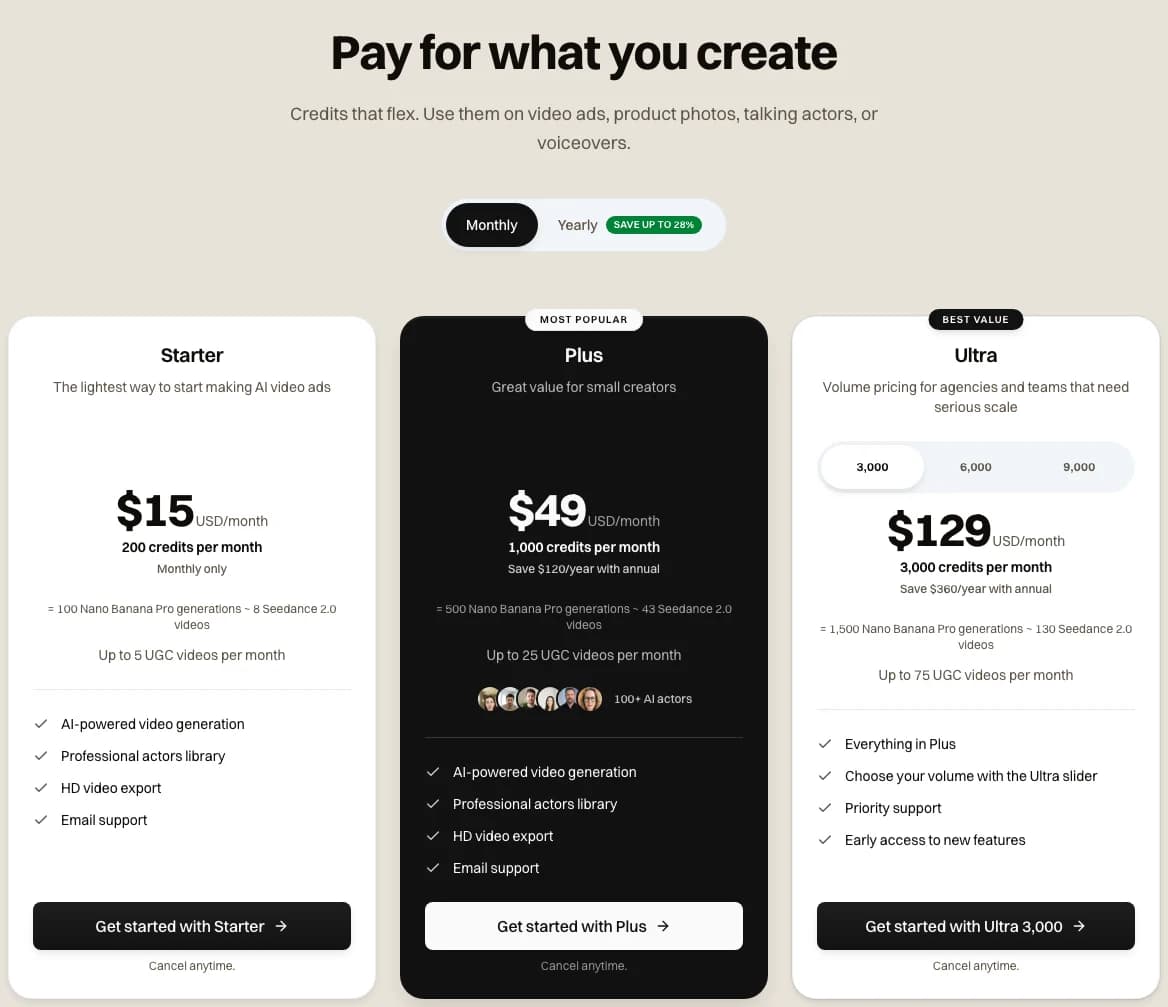
Our pricing page with Monthly selected, captured on 2026-11-09. Starter is $15 a month for 200 credits. Plus is $49 a month for 1,000 credits, and Ultra is $129 a month for 3,000.
You pay for Novoads from the first month. Starter's 200 credits cover two Google Veo 3.1 takes. The same credits cover 14 Wan 3.0 takes at the table's setting, so the model you retake on matters as much as the plan. Compare the plans on our pricing page.
Price your retakes before you render
Every model in the table runs on the same credits. Starter is $15 a month for 200 of them.
See the plansFrequently Asked Questions
Which brands pulled an AI ad after a backlash?
Four of the 12 ads in this post came down. Volvo USA told Jalopnik on March 11, 2025, that Volvo's Saudi Arabia ad was being withdrawn. BBC News reports that McDonald's Netherlands removed its Christmas ad on December 9, 2025. Pelicana pulled its ad in South Korea in May 2026. In June 2026, PPC Land reported that REI's Instagram bike ad came down after about a week. Coca-Cola and Toys"R"Us kept their AI films, and both called them a success.
Key Takeaways
- On December 6, 2025, McDonald's Netherlands posted a 45-second Christmas ad made with generative AI clips. BBC News reports the company pulled it on December 9, and on December 10, a McDonald's spokesperson told Fox News Digital the moment was "an important learning."
- The complaint that came up most, in 7 of the 12 ads, was about what the AI replaced (artists, actors, models or crews). Physical details such as truck wheels and bike parts came up in 5, and faces or hands in 4.
- Four of the 12 came down (Volvo's in Saudi Arabia, McDonald's Netherlands', Pelicana's and REI's). Coca-Cola and Toys"R"Us kept their AI films and called them a success.
- The studies don't agree. In an IAB survey, 45% of young US consumers said they feel positive about AI-generated ads, while 82% of ad executives thought they did. System1 gave both of Coca-Cola's AI holiday films 5.9 stars, the top of its scale.
- In Novoads, a retake is a new run at the model's listed price. At the Plus rate, an eight-second take at 720p costs about 39 cents on Seedance 2.0 Mini. The same take at the same rate costs $3.53 on Google Veo 3.1.
Sources
- •Fox Business, December 10, 2025: McDonald's pulls its AI-generated Christmas ad
- •BBC News, December 10, 2025: McDonald's Netherlands removes its AI Christmas advert
- •NBC News, June 27, 2024: the Toys"R"Us AI video ad
- •NBC News, November 18, 2024: Coca-Cola's AI-made holiday ad
- •Jalopnik, March 11, 2025: Volvo pulls its AI-generated ad for Saudi Arabia
- •Business Insider, October 29, 2025: Meta's AI tools and True Classic's ad
- •Business Insider, June 24, 2026: REI's statement on its altered bike ad
- •Korea JoongAng Daily, May 10, 2026: Pelicana apologizes for its AI ad
- •IAB and Sonata Insights, January 15, 2026: The AI Gap Widens
- •Kantar, March 26, 2026: the state of GenAI in media and advertising